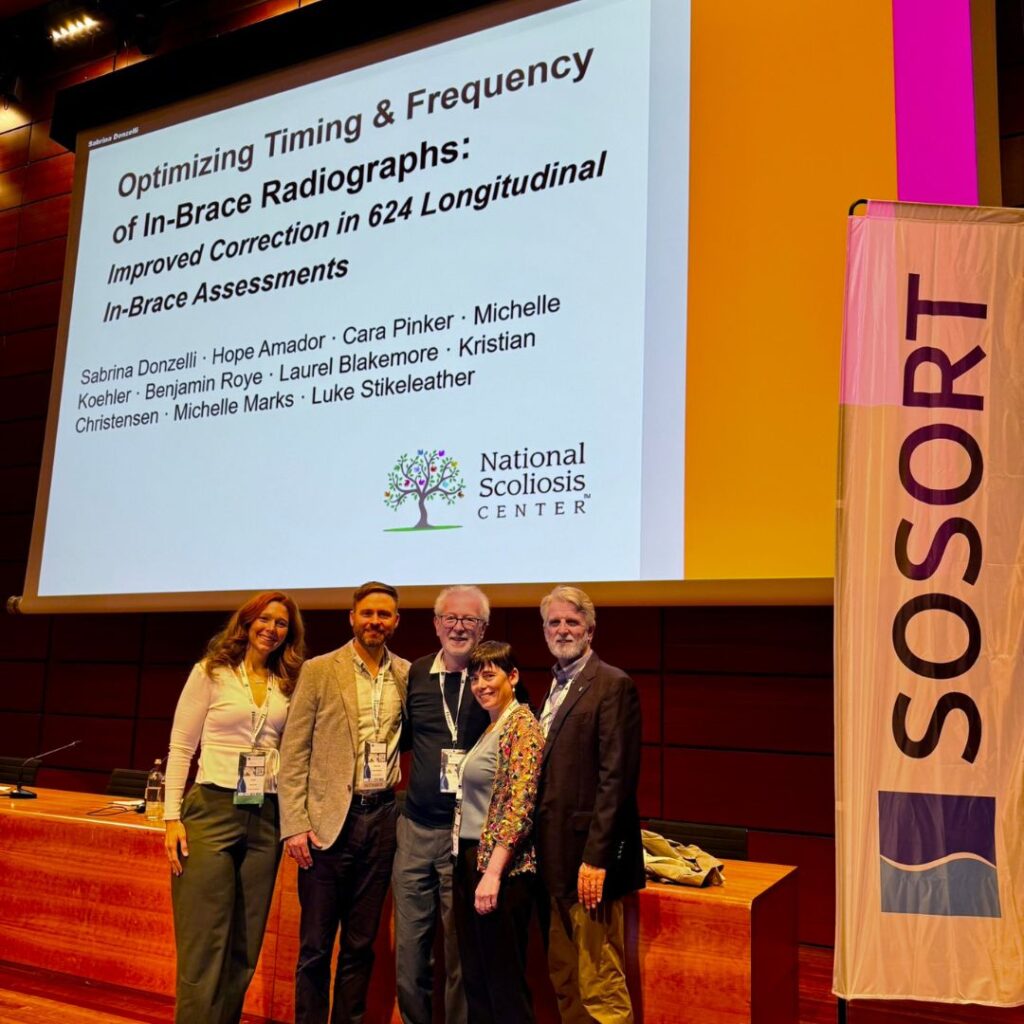
At National Scoliosis Center, we believe that achieving the best outcomes for our patients requires a seat at the global table. We don’t just follow industry standards; we actively participate in the international dialogue to help shape the future of non-surgical scoliosis care. By collaborating with the world’s leading researchers and clinicians, we bring the most advanced, evidence-based bracing techniques back to our clinics in Fairfax, Baltimore, and Houston.
A Strong Presence in Turin, Italy
This commitment to global collaboration was at the heart of our team’s participation at the 2026 SOSORT (International Society on Scoliosis Orthopedic and Rehabilitation Treatment) International Congress in Turin, Italy. This event is a vital hub where experts exchange ideas and build the professional relationships that ensure our care remains world-class.
Our team members contributed to this global exchange through several key clinical and leadership roles:
- Sabrina Donzelli, National Scoliosis Center’s Director of Research, presented our latest study, “Optimizing TLSO Bracing: Growth Modulation is Achievable in AIS and EOS Regardless of Etiology,” to the international assembly. This followed the conclusion of her influential term as the President of SOSORT (2024–2026).
- Kristian Christensen, CPO participated in the pre-course program, “Brace & PSSE – Interactive Workshop & Debate,” where he presented on the challenges of correcting thoraco-lumbar curves and joined round-table discussions on complex case management.
- Hope Amador, CPO, who served as the Chair of the Communication Committee for SOSORT for the last year, emceed panel discussions throughout the event and managed the communication and outreach for the entire Congress.
- Luke Stikeleather, CO, joined the team in Turin, continuing his career-long dedication to collaborating with international pioneers to ensure our patients receive effective, evidence-based care.
Advancing Care Through Research
A highlight of our participation was sharing research that provides new hope for spinal correction. This study, “Optimizing TLSO Bracing: Growth Modulation is Achievable in AIS and EOS Regardless of Etiology,” involved 267 patients and provides evidence that high-quality, custom 3D bracing can achieve meaningful curve improvement during a patient’s growth. This process, known as growth modulation, is a significant focus of our clinical efforts, and we are excited to share that the full research abstract will be published soon.
Our findings emphasized that while diagnosis and age are factors, success is heavily influenced by the quality of the brace and consistent management, including full-time treatment and frequent checkups.
Our Commitment to Your Journey
Ultimately, our participation in global conferences like SOSORT and the Scoliosis Research Society (SRS), as well as our involvement in patient communities like Curvy Girls Scoliosis and Higgy Bears, is driven by a desire to serve our patients with the highest level of expertise, empathy, and compassion. We understand that the field of scoliosis treatment is constantly evolving, and we are committed to this journey of learning and growing. Whether we are presenting research in Italy or supporting patients closer to home—such as when Hope Amador speaks at Higgy Con this summer—we stay active in the global research and patient communities to ensure we offer a friendly smile, encouragement, and the most effective, research-backed care, empowering our patients on every step of their scoliosis journey.