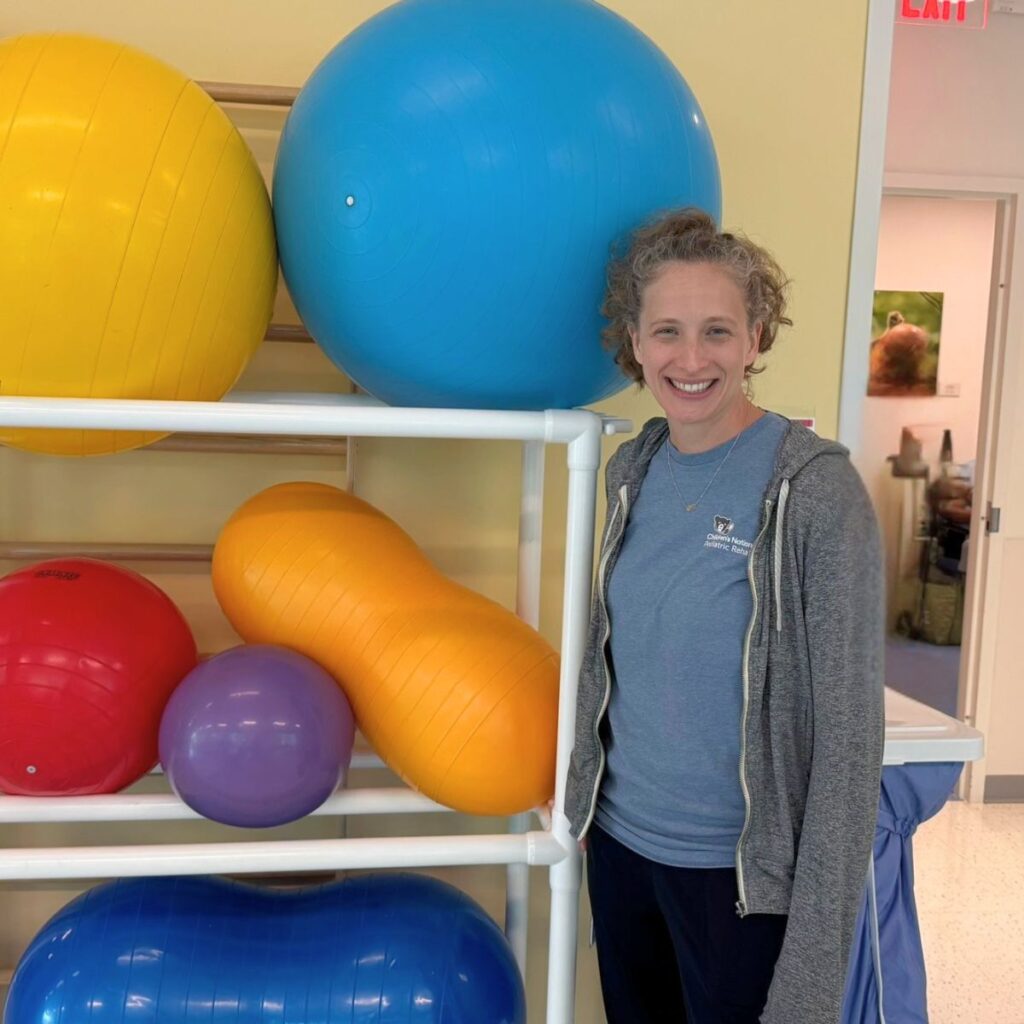
A Conversation with Pediatric PT Julie Smolinski
A complex medical condition—such as cerebral palsy, spinal muscular atrophy (SMA), or genetic conditions like Xia-Gibbs, Prader-Willi, Marfan, or Ehlers-Danlos syndromes—provides parents with a fair share of worries. A scoliosis diagnosis can add an extra layer of worry. This is why treating neuromuscular and syndromic scoliosis isn’t just about managing the spinal curves; it’s about enhancing a child’s comfort, independence, and overall health.
In order to enhance our approach to these curves, we sat down with Julie Smolinski, PT, DPT, PCS, a Board-Certified Pediatric Clinical Specialist at Children’s National Hospital. She shared her invaluable insights on how physical therapy, custom bracing, and family support come together to help children with these complex medical conditions thrive.
1. The Diagnosis: A Different Kind of Curve
For children with developmental delays or underlying syndromes, scoliosis is rarely an isolated diagnosis. It is deeply connected to their overall muscle tone, connective tissues, and structural support.
- What Makes it Unique: As physical therapists, we don’t officially diagnose scoliosis. Instead, children are usually referred to us by an orthopedist because they are experiencing weakness in their trunk or spinal alignment. Conditions like cerebral palsy, SMA, or syndromic conditions characterized by low muscle tone naturally affect how the spine is supported. Because of rapid physical development in early childhood, these curves can develop and progress significantly in a short period.
- Red Flags for Parents: Orthopedists work closely with families to spot changes early. The biggest signs a parent can look for at home is asymmetry, such as one shoulder sitting higher than the other, or changes in how their child sits. For example, if they suddenly lean heavily to one side or can only tolerate sitting in one specific position, it’s time to have a specialist take a closer look. Kids that have a previous history of a head tilt or rotational preference in infancy are at risk for developing spinal changes as they grow, so keep a close eye out for changes in these kids.
2. Preparing for the Brace: Mind, Body, and Sensory Comfort
Receiving a custom scoliosis brace can feel overwhelming, but preparation can turn apprehension into empowerment. The ultimate goal of early bracing is to slow curve progression while allowing proper physical development including optimal lung capacity, organ function, and mobility.
- Shifting the Mindset: Many children with developmental delays already wear other orthotics, like leg braces, so the concept isn’t entirely new. We frame the brace as a supportive tool, explaining to parents and kids that the brace helps them sit up better without totally exhausting their muscles. It gives them the structural freedom to engage the world.
- Sensory Readiness: For children with sensory sensitivities, a rigid brace can be a big adjustment. One of the best ways to prepare them is by introducing compression shirts underneath the brace. This protects their skin and provides a calming pressure, allowing for a smoother physical transition.
3. Adapting to the Brace: The Role of Physical Therapy
Once the brace arrives, the real teamwork begins. Physical therapy ensures the brace works with the child’s movement goals, not against them.
- Supporting the Transition: A great custom brace is a tool for function. By providing external trunk control, it actually allows children to sit with better posture, access their toys, and do things they couldn’t do before. In PT, we use the brace to help increase their endurance and provide the proper alignment needed to actually strengthen their core muscles. This improved posture helps them move more functionally.
- Overcoming Early Hurdles: The first few weeks can be tough. The daily hassle of putting the brace on can cause stress for parents. We spend a lot of time coaching families on what’s normal and what’s not. We teach them how to check for skin redness and exactly when to reach out to their orthotist if the fit needs a slight adjustment.
- Kids are generally resilient, and once wearing the brace becomes routine, they adapt well to this new addition to their plan of care.
4. Redefining Success and Long-Term Progress
In typical idiopathic scoliosis, success is often measured solely by degrees on an X-ray. In complex cases, the goals are much closer to home.
- What Progress Looks Like: While halting curve progression is always a goal, true success is measured in daily life. Progress looks like a child being able to tolerate their brace comfortably during recreational playtime or sit by themselves for longer periods without needing a rest break.
A Message to Parents: This is Not a Failure
I want parents to know that their child needing a brace for neuromuscular scoliosis is not a failure. Parents often carry guilt, thinking they didn’t do enough—but this is entirely due to underlying muscle tone, and it is not anyone’s fault. Kids can absolutely still develop and thrive. A brace is simply an external tool to provide the trunk and head control they need.
The Power of a Collaborative Care Team
My best advice is to collaborate closely with your entire care team. Ultimately, the best outcomes happen when the physical therapists, orthopedists, orthotists, and parents communicate openly, allowing for real-time modifications. This teamwork allows us to give the child more freedom of movement without losing the brace’s structure and purpose.
Your child’s journey is unique, but you never have to navigate it alone.